Physical Therapy for Shoulder Pain: A Performance-Minded Recovery Plan
Shoulder pain is one of those problems that's easy to shrug off until it starts interfering with sleep, lifting, or just reaching for something on a shelf. Physical therapy for shoulder pain works best when it's built around the actual cause, not a generic stretching handout. Here's what a real recovery plan looks like.
How common shoulder pain actually is
Shoulder pain is one of the most frequently reported musculoskeletal complaints, with prevalence estimates in the research ranging anywhere from about 4 to 26 percent of adults, depending on the population studied and how "shoulder pain" is defined. The range is wide because shoulder pain covers a lot of ground - from a brief strain that resolves on its own to a persistent, limiting problem - but the point stands: if your shoulder's bothering you, you're far from alone.
The usual suspects
A few patterns show up often: rotator cuff strain or tendonitis (irritation or overload of the muscles and tendons that stabilize the joint), shoulder impingement (tissue getting pinched during certain movements, often overhead reaching), and instability (a shoulder that feels loose or prone to slipping, sometimes after a prior injury). Each responds to a different approach, which is exactly why a real evaluation matters more than a generic "shoulder exercises" routine found online.
What a real evaluation looks for
A proper evaluation looks at range of motion, strength across the muscles that stabilize the shoulder (not just the ones that move it), how the shoulder blade and upper back are moving, and what specific positions or activities reproduce your pain. That last part matters - a shoulder that hurts reaching overhead and a shoulder that hurts reaching behind your back are often pointing at different underlying issues.
What a performance-minded recovery plan involves
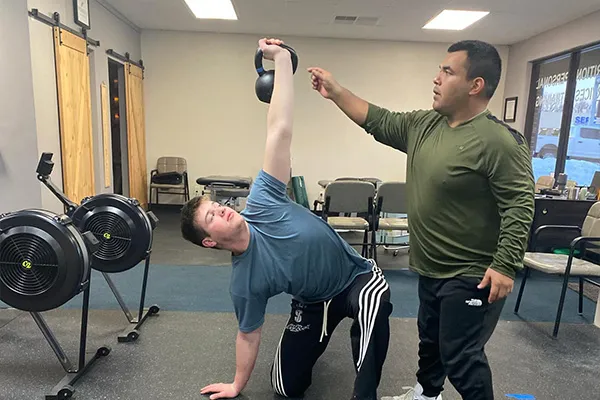
Rather than treating the shoulder in isolation, a performance-minded plan looks at the whole kinetic chain - how your upper back, shoulder blade mechanics, and even your general posture under load are contributing to the pattern. Treatment typically combines hands-on work to address tissue restriction with a progressive strengthening program, because a shoulder that's "pain-free" but still weak tends to relapse the moment real demand comes back - whether that's a workout, a sport, or just normal daily lifting.
When surgery is, and isn't, actually necessary
Most shoulder pain, including many rotator cuff issues, responds well to a structured physical therapy program without surgery. Surgery tends to become a real conversation for specific situations - a complete tendon tear, ongoing instability with repeated dislocations, or a case that genuinely hasn't responded to a real course of conservative treatment. A good evaluation should be honest with you about which category you're actually in, rather than assuming the worst or the best by default.
Frequently Asked Questions
How long does shoulder pain typically take to improve with physical therapy?
It varies by cause and severity, but many people notice meaningful improvement within a few weeks of starting a targeted program, with continued progress over a few months for more involved issues. A real evaluation can give you a more specific timeline for your situation.
Should I rest my shoulder completely, or keep moving it?
Complete rest is rarely the right answer for shoulder pain - prolonged immobility often makes stiffness worse. The right amount and type of movement depends on what's actually going on, which is exactly what an evaluation sorts out.
Do I need a doctor's referral before seeing a physical therapist?
That depends on your insurance plan and state rules. Many patients can be seen directly without a referral; it's worth a quick call to confirm what your specific plan requires.
Dealing with shoulder pain that's not improving on its own? A real evaluation is the fastest way to find out what's actually going on, and whether it's something a structured plan can resolve. Dealing with a sports-related injury instead? Read "Sports Injury Treatment: What to Do in the First 48 Hours" |