Dry Needling Near Me in Kearney, MO: Cost and How to Choose a Provider
If you typed "dry needling near me" into Google, you're probably past the "what is this" stage and into "is this worth trying, and from whom." Both are fair questions. Here's what actually drives the cost, what to ask before you book, and how to tell a well-trained provider from someone who picked up the technique in a weekend course.
What dry needling actually costs, and why it varies
Dry needling pricing varies by clinic, region, and whether it's billed as a standalone session or bundled into a broader physical therapy visit. There isn't a single national average worth quoting, because the billing structure differs so much from one practice to the next - some clinics treat it as an add-on to an evaluation, others as its own line item.
The honest answer, and the one worth getting from any clinic you're considering, is a direct one: call and ask what a session costs, whether it's typically combined with other treatment in the same visit, and whether your insurance (if you're using it) treats it as a covered service or an out-of-pocket add-on. A clinic that can't answer that clearly in one phone call is worth a second look.
Questions worth asking before you book
A few questions tend to separate a clinic that's set up to do this well from one that's less so:
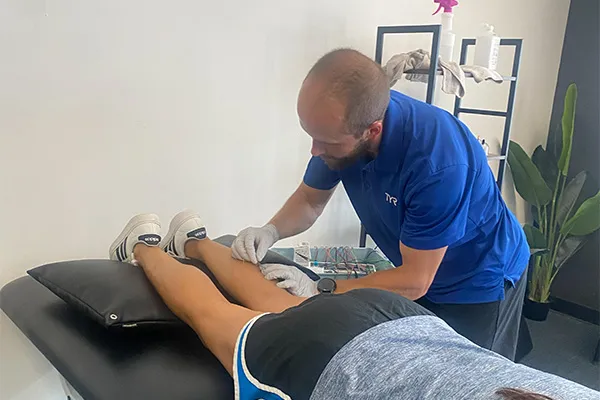
●Who's actually performing the treatment, and what's their specific training in dry needling (not just their general PT or massage license)?
●Is dry needling being used as a standalone treatment, or as one piece of a broader evaluation and plan?
●What should you expect to feel during and after the first session?
●How many sessions does a typical course of treatment involve for something like yours?
What the research actually says
A 2016 systematic review of 19 randomized controlled trials found that trigger point dry needling produced a statistically significant reduction in pain compared to control groups in 14 of the 19 studies, with meaningful improvements in range of motion in several and in broader function or quality of life in others. That's a reasonably strong evidence base for pain reduction specifically - it's not a cure-all, and the review's own authors note that more standardized research is still needed, but it's a legitimate, studied technique rather than a fad.
On safety: a review of adverse events across more than 7,600 recorded treatments found mild, short-lived reactions (minor bleeding, bruising, soreness during or after treatment) in roughly 1 in 5 sessions, and no serious complications recorded in that dataset at all. The takeaway for most people considering it: the common side effects are minor and temporary, and serious complications are rare when it's performed by someone properly trained.
How to spot a well-trained provider
Dry needling certification isn't automatic with a physical therapy or massage license - it typically requires its own separate training and certification beyond a general degree. A provider who's genuinely trained in it should be able to tell you plainly what that training involved and how much hands-on supervised practice it included, not just wave at a general credential.
It's also worth asking how dry needling fits into your specific evaluation, rather than being offered as a one-size-fits-all add-on regardless of what's actually going on with you.
Note: This article is general educational information, not a diagnosis or treatment recommendation. Dry needling is not appropriate for everyone and should only be performed by a properly trained, licensed provider as part of a real evaluation of your specific situation. |
Frequently Asked Questions
Is dry needling the same as acupuncture?
They use a similar thin, filiform needle, but the underlying approach is different - dry needling targets specific muscular trigger points based on a Western musculoskeletal model, while acupuncture is rooted in traditional Chinese medicine's meridian system. They're related tools, not the same practice.
How many sessions does it usually take?
That depends entirely on what's being treated and how you respond - some people notice a difference after one session, others need a short course over a few weeks. A provider should be able to give you a realistic range after your first evaluation, not before it.
Does it hurt?
Most people describe a brief ache or muscle twitch response during treatment rather than sharp pain, and mild soreness afterward that typically resolves within a day or two - similar to post-workout soreness.
Wondering if dry needling makes sense for what you're dealing with? A real evaluation beats guessing from a search result every time. Let's talk about what's actually going on and whether dry needling fits into a plan that makes sense for you. Want to see how dry needling compares to other hands-on treatment first? Read "Dry Needling vs. Traditional Therapies" |